Replay with retry rules
Edit the body, re-sign it with a stored secret, and send it to any endpoint with timeout, retry count, and interval you control.
hook-local receives, inspects, verifies, and replays webhooks locally. Payloads live in a SQLite file on your laptop, not someone's cloud.
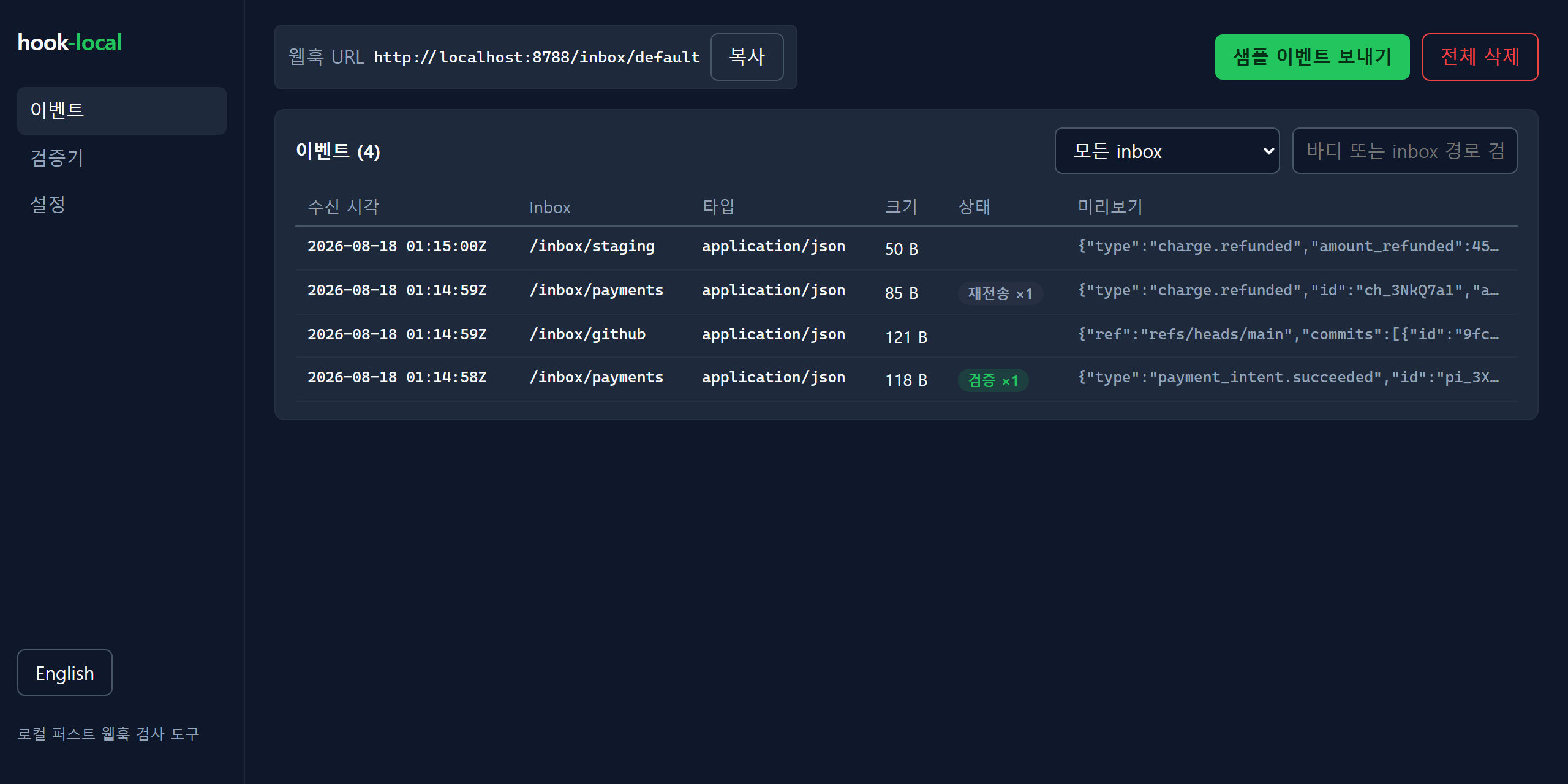
Receiving the request is the easy part. hook-local keeps going: it shows you the exact bytes, proves the signature math, and lets you fire the event again.
HMAC-SHA256 over the raw request body with a timing-safe compare. Configure the header, prefix, and encoding per service, then see the received and computed signatures side by side. You learn why a signature fails, not just that it failed.
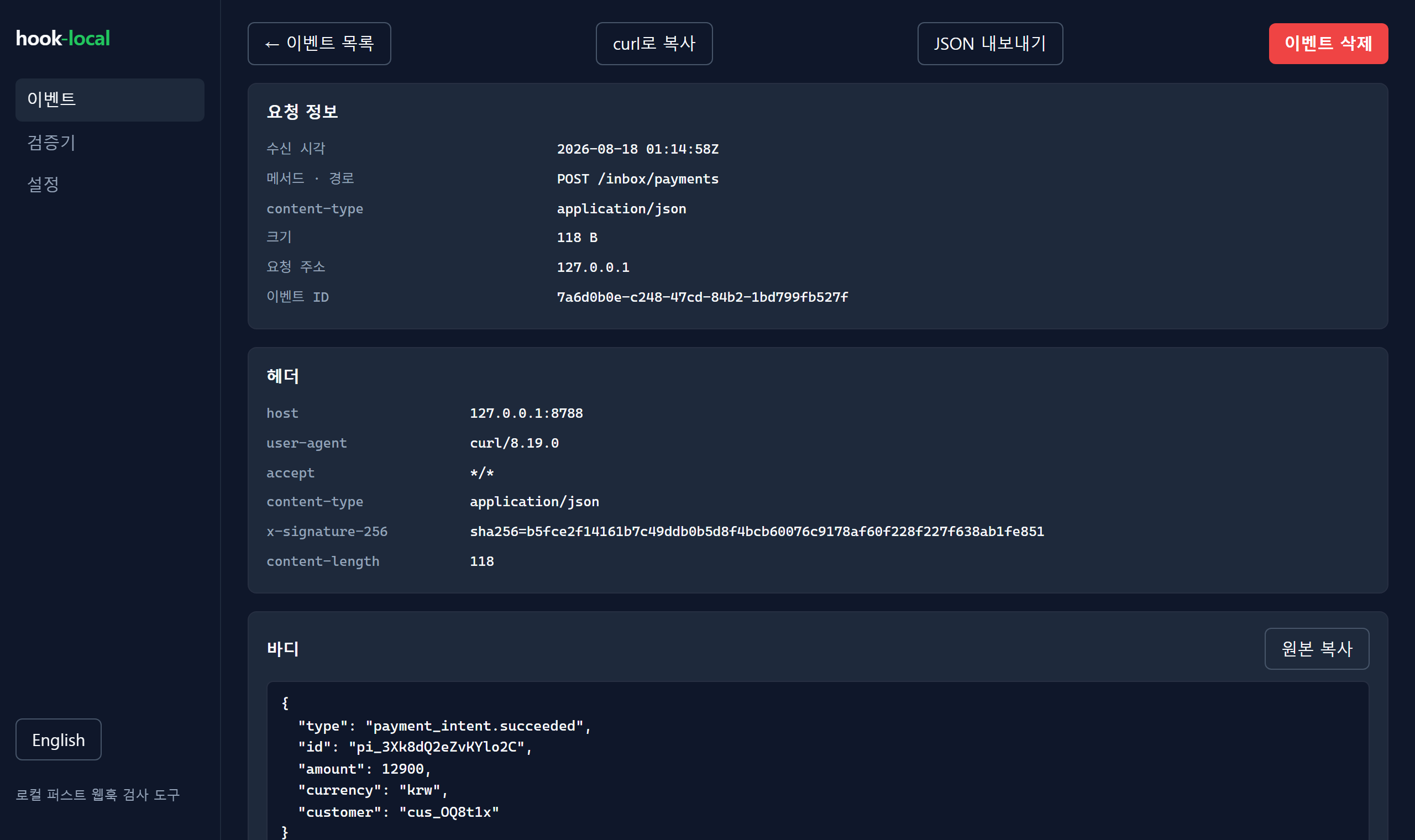
Edit the body, re-sign it with a stored secret, and send it to any endpoint with timeout, retry count, and interval you control.
Tell the inbox to answer 500 or stall for two seconds, then watch how Stripe or GitHub retries against you.
Events live in local SQLite, secrets are encrypted at rest, sensitive headers are masked. Export it all as JSON when you choose to share.
Receive, inspect, and verify: free forever. Replay, failure simulation, and export: 30-day trial, then a Pro subscription. Leave your email for launch pricing.